
Crypto Staking Apy Comparison
 Admin
Admin- posted on
- No Comment
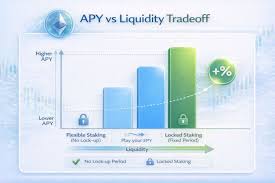
This guide breaks down crypto staking APY. You’ll learn what drives these rates, how to compare them wisely, and what you really need to watch out for. We aim to make this clear so you can feel confident in your staking choices.
Understanding Crypto Staking APY
Crypto staking lets you earn rewards. You lock up your digital coins. This helps support a blockchain network.
In return, you get more coins. The Annual Percentage Yield, or APY, shows your yearly return.
Think of it like a savings account. But for your crypto. The APY is the total interest you earn over a year.
It includes compounding. This means you earn interest on your interest. It’s a key number for comparing different staking options.
Staking works on Proof-of-Stake (PoS) blockchains. These are different from older Proof-of-Work (PoW) systems like Bitcoin. PoS uses validators.
These validators lock up coins to verify transactions. They are then rewarded for their work.
The APY can change. It is not fixed. Many things affect it.
This is why comparing them is tricky. You need to look past just the number. You need to see the whole picture.
Factors That Influence Staking APY
Several things make staking APYs go up or down. It’s not just random. One big factor is the network’s total staked amount.
More coins staked means the rewards are shared among more people. So, the APY might be lower.
The demand for staking also plays a role. If many people want to stake a coin, APYs might drop. This is because supply of rewards is fixed.
High demand for a limited reward pushes prices up. In crypto terms, this means a lower APY for everyone.
The blockchain’s consensus mechanism matters. Some PoS variations are more efficient. They can offer higher rewards.
Others might be slower. They may offer lower returns. The underlying technology is important.
Also, consider the specific staking platform. Different exchanges or wallets have their own rules. They might take a small fee.
This fee reduces your net APY. Always check the platform’s cut.
Finally, the coin’s own price volatility affects your real gains. A high APY on a coin that drops in value might not be worth it. You could lose more from the price drop than you gain from staking.
Understanding APY vs. APR
You’ll see both APY and APR. APY is Annual Percentage Yield. It includes compounding.
APR is Annual Percentage Rate. It does not include compounding.
For staking, APY usually gives a better idea of your total earnings. Because rewards are often paid out and can be restaked. Always aim for APY if possible.
The Staking Journey: A Personal Story
I remember when I first dived into staking. It was early 2021. Bitcoin was soaring.
But I wanted more than just price bumps. I heard about staking Ethereum. The idea of earning passive income felt amazing.
I picked a well-known exchange. They advertised a decent APY for ETH staking. I sent over a small amount.
I thought I was set.
The first few weeks were exciting. I saw my rewards ticking up. It felt like free money!
But then I started reading more. Other platforms offered higher APYs. Some people were staking directly on the network.
They talked about validator nodes. I felt a bit lost. Was I missing out?
I had locked my ETH. I couldn’t easily move it. The APY I saw was not the final number after fees.
It felt like I had jumped into a pool without checking the depth.
That confusion led me down a rabbit hole. I spent weeks researching. I learned about different PoS chains.
I looked at Lido, Rocket Pool, and Coinbase. Each had its own way of doing things. Each offered different yields.
Some required technical knowledge. Others were simple clicks. I realized the “best” APY wasn’t always the highest number.
It was the best for my situation. My goals. My risk tolerance.
It was a big lesson in not just chasing the biggest number.
Comparing APYs Across Different Cryptocurrencies
Comparing APYs for different cryptocurrencies is like comparing apples and oranges sometimes. Each coin has its own ecosystem. Each has its own staking rules.
For instance, Cardano (ADA) staking APYs tend to be in a certain range. They are influenced by the number of stakers and network activity.
Then you have coins like Solana (SOL). Its APY can fluctuate more. This is tied to its faster transaction speeds and different network structure.
Sometimes, newer or smaller coins offer very high APYs. This is to attract stakers. But these often come with higher risk.
Stablecoins are another category. Staking stablecoins like USDC or USDT can offer lower APYs. But they are much less risky.
The value of the coin stays near $1. This makes them a safer bet for some. You’re not exposed to crypto price crashes.
When you see an APY, ask yourself: What is this APY based on? Is it a fixed rate? Or is it variable and based on network performance?
Top Staking Coins & Typical APY Ranges (Examples)
These are general ranges and can change quickly.
| Cryptocurrency | Typical APY Range | Notes |
|---|---|---|
| Ethereum (ETH) | 3-5% (Post-Merge, direct staking) | Liquid staking derivatives can offer slightly higher. |
| Cardano (ADA) | 3-6% | Dependent on number of active stake pools. |
| Solana (SOL) | 5-8% | Can vary with network performance. |
| Polkadot (DOT) | 10-15% | Often higher, but has lock-up periods. |
| Algorand (ALGO) | 3-6% | Direct participation in the network. |
Navigating Staking Platforms for the Best APY
Where you choose to stake makes a big difference. Exchanges like Binance, Kraken, and Coinbase offer staking services. They make it very easy.
You usually just click a button. But they take a cut. This fee reduces your actual APY.
Their APYs might look good, but check the net return.
Then there are dedicated staking platforms. Think Rocket Pool for Ethereum. Or Stakely.io for various coins.
These often offer more options. They might have slightly higher APYs. But they can also be more complex.
You might need to run your own node or use specific wallets.
DeFi (Decentralized Finance) protocols offer another avenue. Platforms like Lido Finance allow liquid staking. You get a token representing your staked assets.
You can then use this token in other DeFi activities. Lido’s APY for ETH is competitive. But DeFi has its own risks.
Smart contract bugs can happen.
When comparing platforms, look beyond the headline APY. Check the fee structure. See how often rewards are paid out.
Are there minimum staking amounts? Is there a lock-up period? If you need your crypto back quickly, a platform with no lock-up is better, even if the APY is a bit lower.
Quick Scan: Platform Features to Check
- APY Offered: The headline number.
- Platform Fees: What percentage do they take?
- Reward Distribution: Daily, weekly, monthly?
- Lock-up Period: Can you withdraw anytime?
- Minimum Stake: How much crypto do you need to start?
- Security Measures: How safe are your funds?
Risks Associated with High APY Staking
It’s tempting to chase the highest APY. I’ve been there. But often, very high APYs hide big risks.
One common risk is impermanent loss. This happens mostly in liquidity pools, but similar concepts can apply to unstable staking rewards.
Another major risk is the volatility of the underlying asset. If a coin promises 50% APY, but its price halves in a month, you’ve lost way more than you gained. The APY is just on the number of coins.
It doesn’t protect you from the coin’s value dropping.
Smart contract risk is also a big one, especially in DeFi. If the code for the staking protocol has bugs, hackers could exploit it. This could lead to total loss of your staked funds.
Audits help, but they are not foolproof.
Validator Slashing is a risk on some PoS networks. If a validator acts maliciously or goes offline, their staked coins can be penalized. This means you could lose a portion of your principal.
Some platforms absorb this risk, others pass it to you.
Finally, regulatory risk looms. Governments worldwide are still figuring out how to regulate crypto. New rules could impact staking services or specific coins.
This could affect your ability to access your funds or the value of your staked assets.
Myth vs. Reality: High APY Staking
Myth: High APY means guaranteed profit.
Reality: High APY is a potential return, not a guarantee. It doesn’t account for asset depreciation or platform risks.
Myth: All staking is the same.
Reality: Staking varies greatly by blockchain, platform, and coin. Each has unique risks and reward structures.
Myth: You can always get your crypto back instantly.
Reality: Many staking methods have lock-up periods. Early withdrawal might incur penalties or be impossible.
Myth: Staking is risk-free passive income.
Reality: Staking carries significant risks, including market volatility, smart contract failures, and network issues.
How to Safely Find Good APY Staking Opportunities
Finding good APY staking opportunities is about balance. You want a decent return. But you don’t want to gamble your principal away.
Start with coins you already understand and trust. If you believe in a project long-term, staking its token makes more sense.
Look at established PoS coins. Ethereum, Cardano, Polkadot, and Solana are good examples. Their networks are battle-tested.
Their staking mechanisms are well-understood. The APYs might not be sky-high, but the risk is generally lower.
Use reputable comparison sites. Sites like CoinMarketCap or CoinGecko often list staking information. They might show current APYs and platforms.
Always double-check this information on the platform itself. Numbers can change fast.
Consider liquid staking. Platforms like Lido or Rocket Pool offer liquid staking for ETH. This means you get a token you can trade or use elsewhere.
It gives you flexibility. The APY is usually competitive. You get rewards plus potential for other gains.
Diversify your staking. Don’t put all your crypto into one coin or one platform. Spread it out.
This reduces your risk if one particular coin or platform faces issues. It also allows you to benefit from different networks.
Read the fine print. Always understand the terms and conditions of any staking service. Know the fees, lock-up periods, and any penalties.
What happens if the validator you delegate to misbehaves? These details are crucial.
Staking APY Checklist for Beginners
Before you stake, ask yourself:
- Do I understand this cryptocurrency and its purpose?
- Is the APY realistic for this coin/network? (Beware of extreme numbers)
- What are the fees charged by the platform/exchange?
- Are my funds locked? For how long?
- What are the risks if the coin’s price drops significantly?
- Are there risks of slashing or smart contract failure?
- How often are rewards paid out?
Real-World Scenarios: When Staking APY Matters Most
Imagine you have a chunk of Ethereum. You believe in its long-term future. But you don’t want it just sitting there.
Direct staking on the Ethereum network offers an APY. It’s usually modest, around 3-5%. This is good for long-term holding.
It helps secure the network. You get steady, compounding rewards.
Now, think about someone holding a newer PoS coin. They might see APYs of 15-20%. This can be attractive.
But the coin itself might be very volatile. If the price drops 50%, the high APY is wiped out. This scenario highlights the need to balance APY with the coin’s fundamental strength and market sentiment.
Consider someone saving up for a down payment. They might choose to stake stablecoins. An APY of 5-10% on USDC might be appealing.
It’s safer than staking volatile assets. They get some yield. But their principal is protected from crypto market swings.
This is about capital preservation with some gain.
The environment where you stake also matters. Staking on a centralized exchange (CEX) like Binance is easy. You get a clear APY.
But you trust the exchange with your keys. Staking through a decentralized protocol means you control your keys. It’s often more complex but offers more autonomy.
Your choice depends on your comfort with technical details and risk.
What Staking APY Means for Your Portfolio
Understanding staking APY helps you make smarter choices. For a long-term investor, a moderate APY on a solid asset like ETH or ADA can be a great way to increase holdings. It’s like a bonus.
It helps offset inflation. It grows your position without requiring extra capital outlay.
If you’re more of a short-term trader, high APYs on volatile coins might seem attractive. But this is very risky. You’re essentially betting on both the price going up AND the staking rewards.
It’s a double gamble. Most experienced traders avoid this.
For those seeking capital preservation, staking stablecoins offers a middle ground. You get a yield that’s often better than traditional savings accounts. While still carrying some platform risk, it’s much less than volatile crypto staking.
This can be a good place for emergency funds or short-term savings.
Ultimately, staking APY is just one piece of the puzzle. It’s important, but not the only factor. Your overall portfolio strategy should guide your decisions.
Does staking fit your risk tolerance? Does it align with your financial goals?
Quick Tips for Maximizing Staking Returns Safely
1. Start Small: Dip your toes in with a small amount. Learn how it works.
See how rewards accrue. This helps you gain confidence. You can always stake more later.
2. Research is Key: Never stake a coin or use a platform without doing your homework. Understand the project.
Understand the risks. Look for reputable sources of information.
3. Beware of “Too Good to Be True”: If an APY seems astronomically high, it probably is. There’s usually a hidden risk or a catch.
Stick to more realistic rates for safer staking.
4. Compound Your Rewards: If the platform allows, automatically restake your earned rewards. This takes advantage of compounding.
It can significantly boost your overall returns over time.
5. Stay Informed: The crypto market changes rapidly. Network upgrades, new regulations, or platform issues can affect APYs and risks.
Keep up-to-date with any staking arrangements you have.
6. Consider Lock-up Periods: Understand if your crypto will be locked. If you might need access to funds quickly, look for flexible staking options.
Non-custodial staking or liquid staking can offer this.
Frequently Asked Questions About Crypto Staking APY
What is the safest way to stake crypto for APY?
The safest way generally involves staking well-established cryptocurrencies on reputable platforms with low fees and no mandatory lock-up periods if possible. Staking stablecoins also reduces risk related to price volatility. Always prioritize understanding the risks and doing thorough research.
Can staking APY be guaranteed?
No, staking APYs are generally not guaranteed. They are estimates based on current network conditions, participation rates, and platform fees. Actual yields can vary.
Some platforms may offer promotional fixed rates for a limited time, but these are exceptions.
How often are staking rewards paid out?
Reward payout frequency varies widely. Some platforms pay daily, others weekly or monthly. Some decentralized protocols might pay out rewards more frequently, even in real-time.
This depends on the specific blockchain and the staking implementation.
What is the difference between APY and APR in crypto staking?
APY (Annual Percentage Yield) includes the effect of compounding, meaning you earn interest on your interest. APR (Annual Percentage Rate) does not include compounding. APY typically gives a more accurate picture of your total potential earnings over a year, especially if rewards are regularly reinvested.
Are there taxes on staking rewards?
Yes, in most jurisdictions, staking rewards are considered taxable income. You may owe taxes when you receive the rewards, or when you sell the crypto received as rewards. Tax laws are complex and vary by location.
It’s advisable to consult with a tax professional familiar with cryptocurrency.
What are liquid staking derivatives?
Liquid staking derivatives are tokens you receive when you stake your cryptocurrency through a liquid staking service. For example, staking Ethereum (ETH) on Lido might give you stETH. This token represents your staked ETH plus accrued rewards, and you can use it in other DeFi applications while still earning staking rewards.
Final Thoughts on Crypto Staking APY
Navigating the world of crypto staking APY can feel overwhelming. But by understanding the factors that influence yields, knowing the risks, and doing your research, you can make informed decisions. Remember, the highest APY isn’t always the best APY.
Focus on sustainable returns and security.